

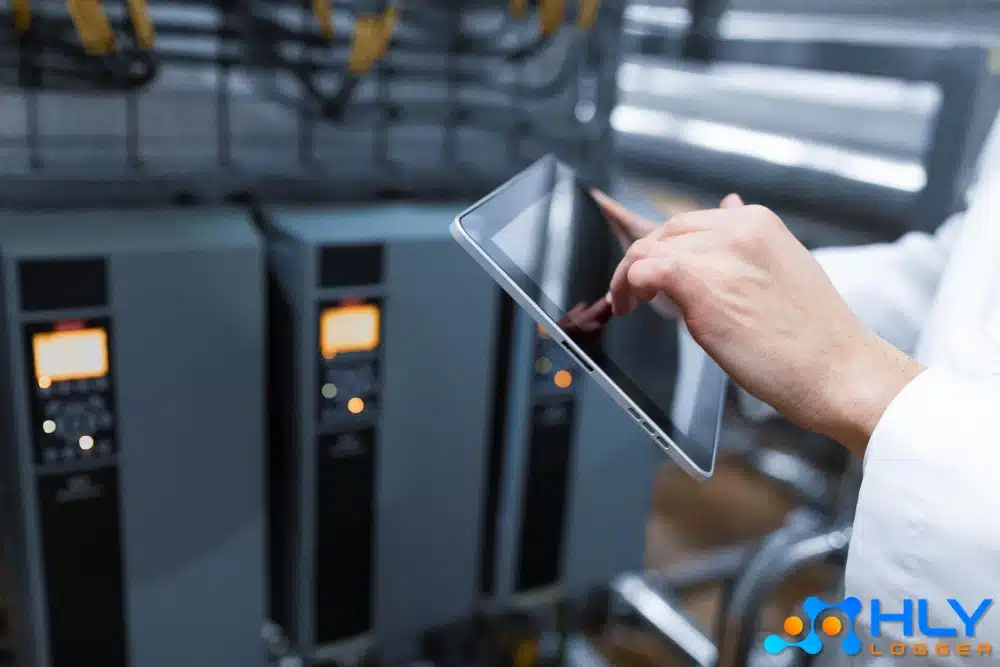
Data acquisition devices are a popular choice for capturing measurements from the physical world. To do their job, they connect to a computer that reads and processes the data they gather, and much of their appeal comes from flexibility, since a single device can serve many different applications. In the acquisition process, where analog information is transformed into digital data, speed matters just as much as accuracy. Faster conversion makes the time between measurement and decision shorter, so accuracy, speed, and the flexibility of the tools are the three qualities that carry the most weight.
So, how does a device turn a real-world phenomenon into usable digital data? It comes down to a small chain of elements working in sequence.
Data Acquisition Devices and the Elements of the System
Transforming information from the physical world into digital data relies on three core elements working together. The front line is a sensor that detects a phenomenon, followed by signal conditioning that prepares the reading, and finally the component that converts analog signals into digital form. That converter is the Analog-to-Digital Converter, or ADC, which sits at the heart of the system.
Sensor
Also known as a transducer, the sensor is the part that receives the phenomenon. It observes a physical event that the system needs to record, such as movement, force, or temperature, and translates it into an electrical signal. The sensors in common use tend to map to three kinds of measurement:
- Force. Strain gauges measure force and pressure by responding to tiny deformations in a material. Their signal is small, which is why they usually need extra conditioning before conversion.
- Movement. Accelerometers capture motion, vibration, and acceleration. They are widely used in testing, machinery monitoring, and any setting where movement carries meaning.
- Temperature. RTDs, thermistors, and thermocouples each measure temperature with different ranges and accuracy profiles. The right one depends on how hot the environment gets and how precise the reading has to be.
Whatever the measurement, the quality of the final digital data starts here. A sensor with higher accuracy gives the rest of the chain a cleaner signal to work with, so it is worth choosing the most accurate option the application allows.
Signal Conditioning
Signal conditioning is the bridge that strengthens the raw measurement before it reaches the ADC. It is additional circuitry, but its role is far from optional, because a weak or noisy signal converted as-is produces unreliable data. The catch is that conditioning has to match the sensor, since each type has its own requirements.
A temperature sensor, for example, typically needs filtering to remove noise along with amplification or attenuation to bring the signal into the right range. A force sensor such as a strain gauge needs calibration, bridge completion, and excitation to produce a usable reading. Getting this stage right is often the difference between data you can trust and data you cannot.
ADC
The ADC is the core of the whole system. It usually takes the form of a small chip, yet it does the essential work of converting the raw signal into discrete digital levels that a processor can interpret. Two characteristics shape how good that conversion is: resolution, meaning how finely the signal is divided into steps, and sampling rate, meaning how many readings it takes per second. Higher resolution captures more detail, while a faster sampling rate keeps up with signals that change quickly.
Once the processor has the digital data, software takes over to analyze, visualize, and store it. In short, a data acquisition device works in four stages: receiving the phenomenon through a sensor, conditioning the signal, converting it, and processing the result.
Data Acquisition Devices in Terms of Monitoring
Understanding how the device works also explains why so many industries rely on it as a monitoring tool. Because it is versatile and accurate, it fits a wide range of settings where conditions have to be watched closely. These are four of the fields where it does the most work.
Research and Development
R&D is where new and beneficial inventions take shape, and many experiments have to be monitored closely because of the risks involved. Engineering, chemistry, and physics all run experiments where a data acquisition device records conditions accurately enough to trust the results.
Medical Service
In healthcare the stakes are highest, because the data is tied directly to human life. An ECG, for instance, depends on careful monitoring that data acquisition devices help provide, and medical professionals use that data to make decisions about patient care. Where the readings need to be repeatable across many patients, a reusable unit such as the M502-TH reusable data logger supports consistent, documented monitoring.
Automation Manufacturing
Producing high-quality components calls for tools that optimize the process and track quality along the way. A data acquisition device can monitor equipment performance and feed that information back to engineers, which is exactly the kind of visibility a wider industrial application monitoring setup is built to deliver.
Environment
Assessing the quality of essentials such as water and air depends on reliable measurement, and the data often informs public health decisions at the regional government level. These tools monitor humidity, temperature differences, and pollutant levels, turning environmental conditions into data that policy can act on.
Across these four sectors, data acquisition devices are genuinely fundamental. They may play a smaller role in some other industries, but even there they are useful enough to be worth serious consideration.
Need Data Acquisition Devices?
It is no exaggeration to call these devices essential, and HLY Logger builds products designed to support the systems that depend on them. Since 2011 we have supplied advanced devices and IoT solutions, specializing in automatic control systems, device tracking, and data acquisition.
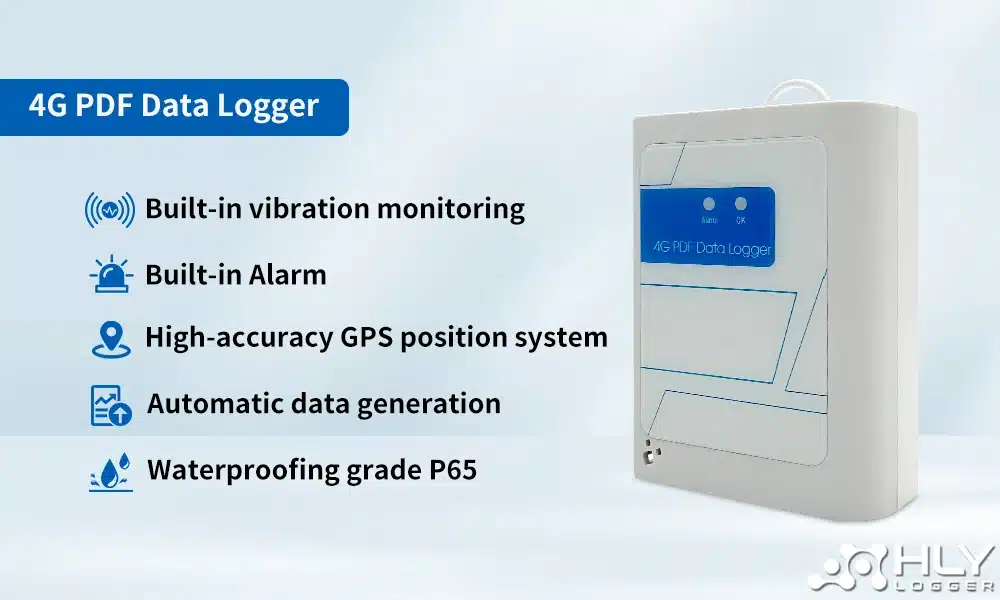
HLY data loggers deliver high accuracy and high efficiency through user-friendly interfaces, backed by an R&D team that stays consistent and committed to innovation. Because every component in a system affects the final result, it pays to build on dependable hardware. For teams that need monitoring shaped around their own operation, we also offer IoT hardware with OEM and ODM services, so the solution fits the application rather than the other way around.
Frequently Asked Questions
What is a data acquisition device?
It is a device that captures physical phenomena such as temperature, force, or movement through a sensor and converts them into digital data a computer can process. The conversion runs through four stages: sensing, signal conditioning, analog-to-digital conversion, and processing.
How do I choose the right sensor for accurate data?
Start from what you need to measure and how precise the reading has to be, then match the sensor type and its conditioning requirements to that. For temperature work, choosing between an RTD, thermistor, or thermocouple depends on your range and accuracy needs, and pairing it with the correct filtering and amplification is what keeps the final data reliable.
This article was last reviewed and updated by the HLY Logger Editorial Team on July 8, 2026, to keep its technical information accurate and relevant for readers.